

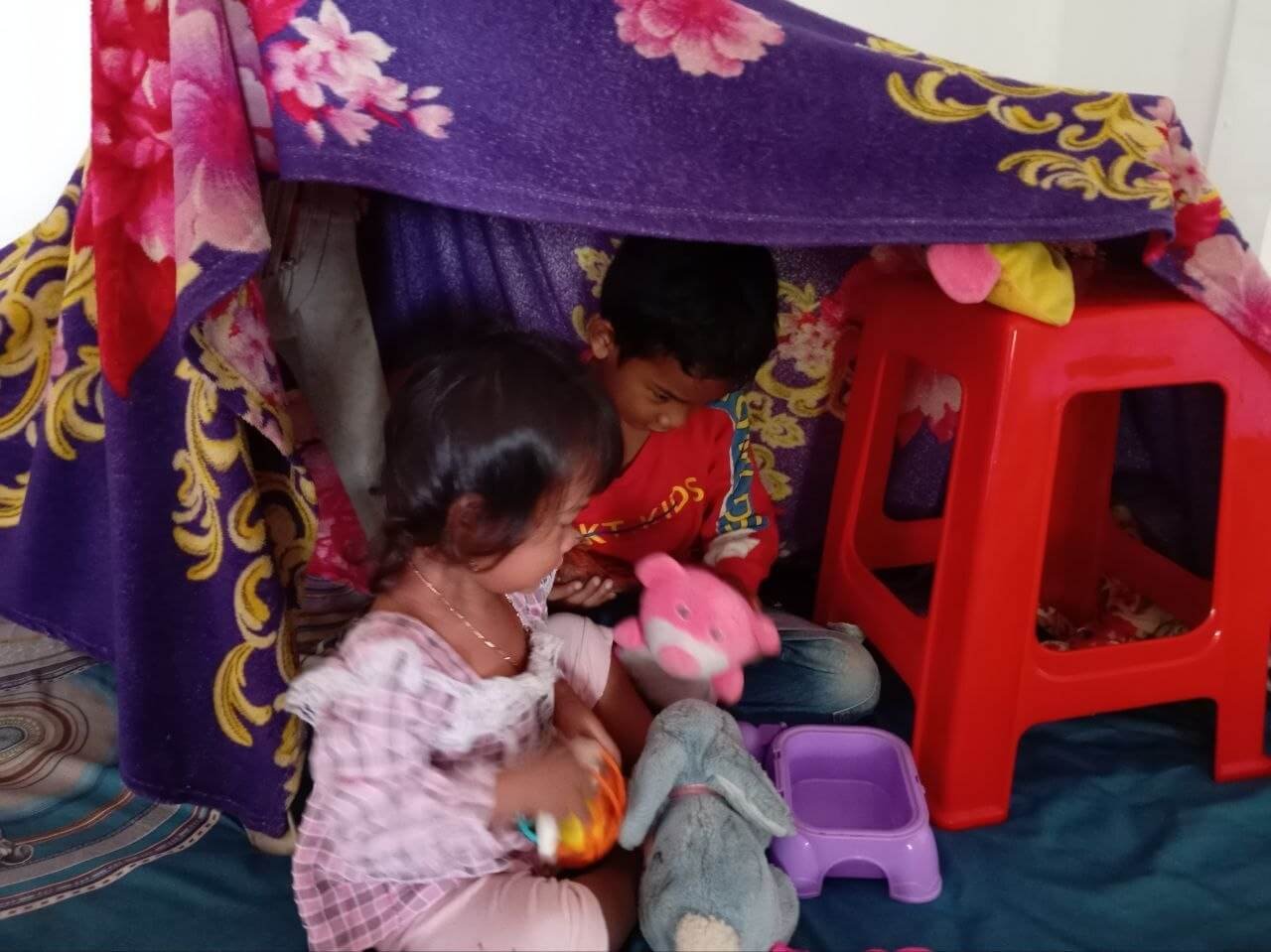
With an 8-year-old and a 3-year-old at home, finding one thing they both want to do can feel impossible. Five years is a big gap. What excites one bores the other, and toys that suit the older one are often too fiddly for the little one.
So I went looking for activities for siblings with a big age gap, and the answer turned out to be one I already knew: a blanket fort.
It took me about three minutes to set up. Then I heard a voice from under the blanket: “How much is this doll? Let me be the seller now…” Some words were clear, some were a happy jumble, and loud afternoon laughter mixed it all.
No screens, no expensive toys. Just a blanket, a stool, and the living room floor.

Below is exactly how we built it, how they played together, and what I noticed along the way. If you need a quick way to entertain kids at two very different stages, this is easy to try today.
What You Need for an Easy Blanket Fort in a Small Living Room
You do not need a picture-perfect living room or a store-bought building kit. Everyday items work well, and I have found they often spark more imagination than fancy sets do.
Here is everything we used:
- The foundation: A standard red plastic stool with a few anchor points around it.
- The roof: A large, thin purple blanket with a floral pattern. Because it was so lightweight, it draped over the stool nicely and did not slip off. If you can, pick a blanket or fabric that is soft and thin.
- The inhabitants: A few favorite soft toys, including a small pink teddy bear and a gray plush bunny. The more toys you bring in, the better, since they help fill up the new hideout.
How to Make a Blanket Fort With a Stool, Step by Step
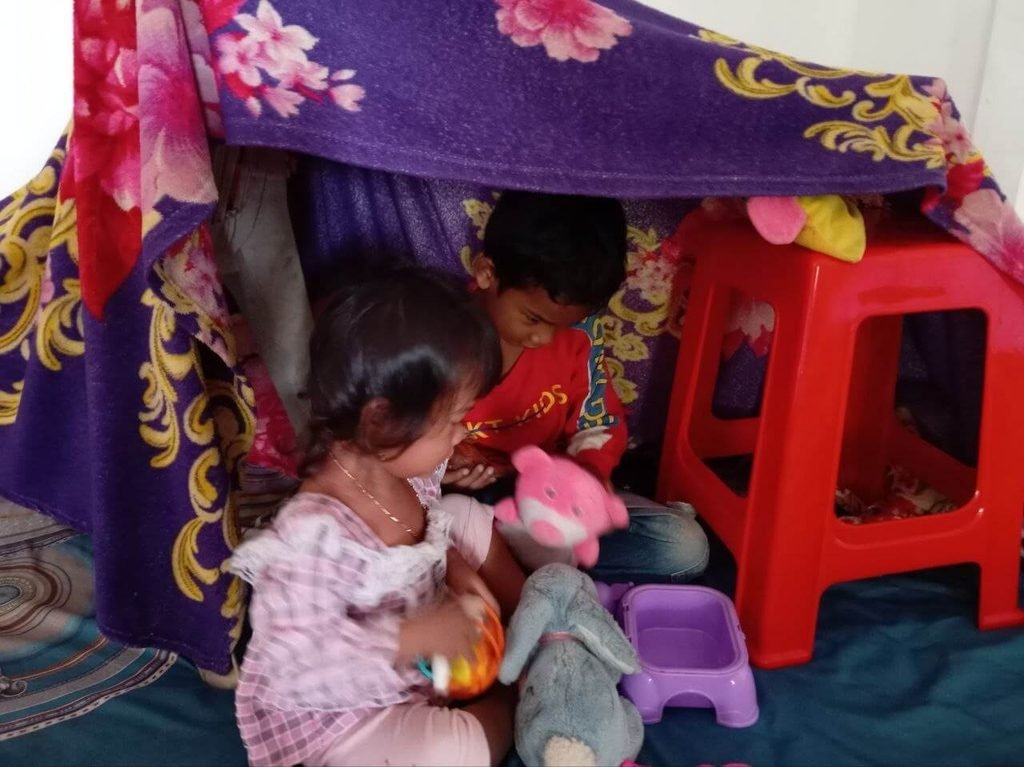
- Set the center. We placed the red plastic stool in the middle of the play mat. It became the main support pillar for the whole fort.
- Drape and secure. The 8-year-old took the lead and carefully draped the purple blanket over the stool, creating a cozy, cave-like space underneath.
- Furnish the fort. Once the structure was steady, the 3-year-old took charge of moving in the essentials, mostly stuffed animals and a few small plastic toys.
- Start playing pretend. At first I suggested that my daughter be a vendor selling the stuffed animals and plastic toys. That went on for a while, until I heard, “It’s my turn to be the seller!” followed by giggles and classic little-kid chatter. Soon after, the game turned into the two of them playing villagers who share their toys with each other.
Why a Blanket Fort Works for Siblings
What I love most is that each child got a job that fit them. Nobody had to play down to the other’s level.
Space inside a fort is tight, so the two of them had to work out how to share it. I watched them sit knee to knee, figuring out where everyone’s feet could go without pulling down the walls.
The 8-year-old naturally became the project manager, checking that the “walls” stayed up. The 3-year-old focused on the story, weaving the pink teddy bear into the game.
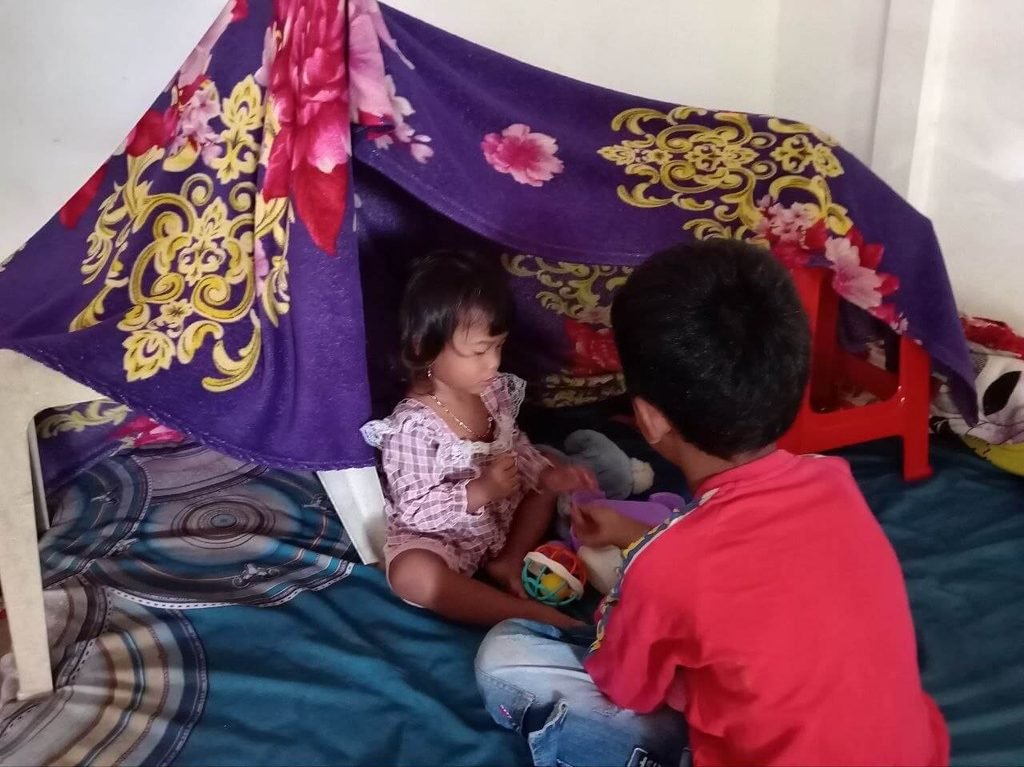
My favorite moment came when the little one decided to move the red stool. That would have brought the whole roof down. The 8-year-old stopped and explained, patiently, why the stool had to stay exactly where it was.
It was a small moment, but it showed me how well this setup lets an older and younger sibling meet in the middle.
What Kids Learn From Building a Blanket Fort
As parents, we tend to overthink playtime. We hunt for the perfect educational toy or the newest app. Yet this simple fort taught three useful lessons:
- Creativity: They turned everyday household items, a plastic stool and a blanket, into a place worth playing in.
- Spatial awareness: They had to move around a small, wobbly space without knocking it over.
- Teamwork and sharing: They practiced deciding who gets which toy and how to play together when an older sibling’s logic meets a younger sibling’s imagination.
Building a fort together is a great starting point for teamwork, because the whole thing falls apart unless both kids cooperate.
Blanket Fort Ideas for Toddlers and Older Kids
A few things made this work well for us, and they should help in your home too:
- Let the older child handle the building, and the younger one handle the decorating. Everyone gets a real role.
- Use a light, thin blanket so it drapes easily and stays put.
- Keep the fort low and compact so it fits a small room.
- Add extra soft toys and small plastic toys to give the pretend play more characters.
- Step back after the setup. Ours got much better once I stopped directing it.
It also turned out to be a massive success for a rainy afternoon, mostly because it requires no special supplies and almost zero cleanup.
Final Thoughts
If you are searching for activities for siblings with a big age gap, try the simplest thing first. Hand them a blanket, take a step back, and let them figure it out together.
In our house, three minutes of setup turned into an afternoon of laughter, and it reminded me that the best playtime rarely needs anything fancy.
Disclaimer: The ideas and routines shared on TheParentings reflect my personal experiences as a mother and primary school teacher. This content is for informational purposes only and is not a substitute for professional medical, developmental, or psychological advice. Always consult your pediatrician with specific concerns regarding your child’s health or safety.
