

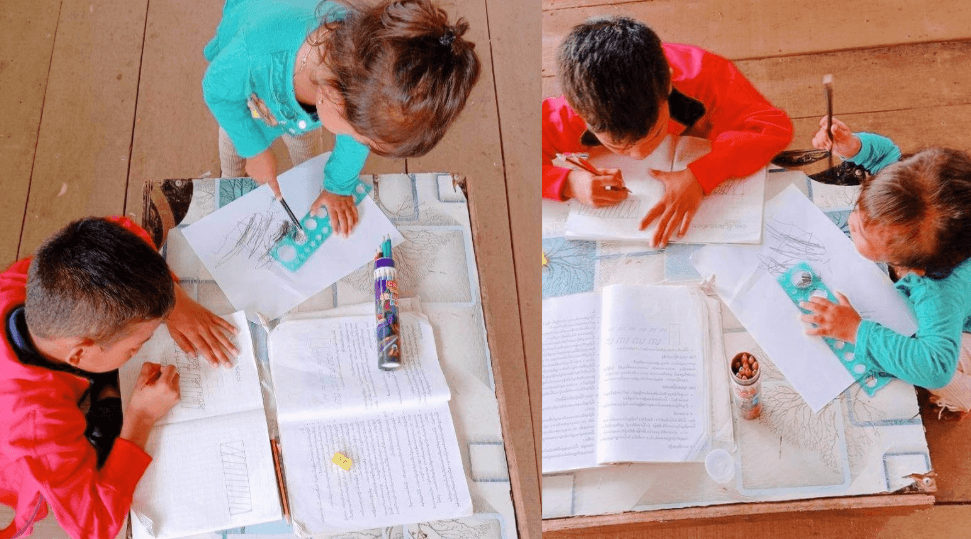
Whenever my son sits down to do his homework, the entire house fills with the sound of my little daughter crying, “No, no! That one! Go away, go away!”
I am sure I am not the only parent who has survived this chaotic, loud routine. Any mom raising two kids with a similar age gap has probably walked a mile in my shoes.
If you’ve been desperately searching for ways to keep a toddler busy during homework hour, you already know exactly how overwhelming and exhausting that time can get.
My 8-year-old son needs a quiet space to focus on his school assignments, while my 3-year-old daughter just wants to hover over him and copy absolutely everything her big brother is doing.
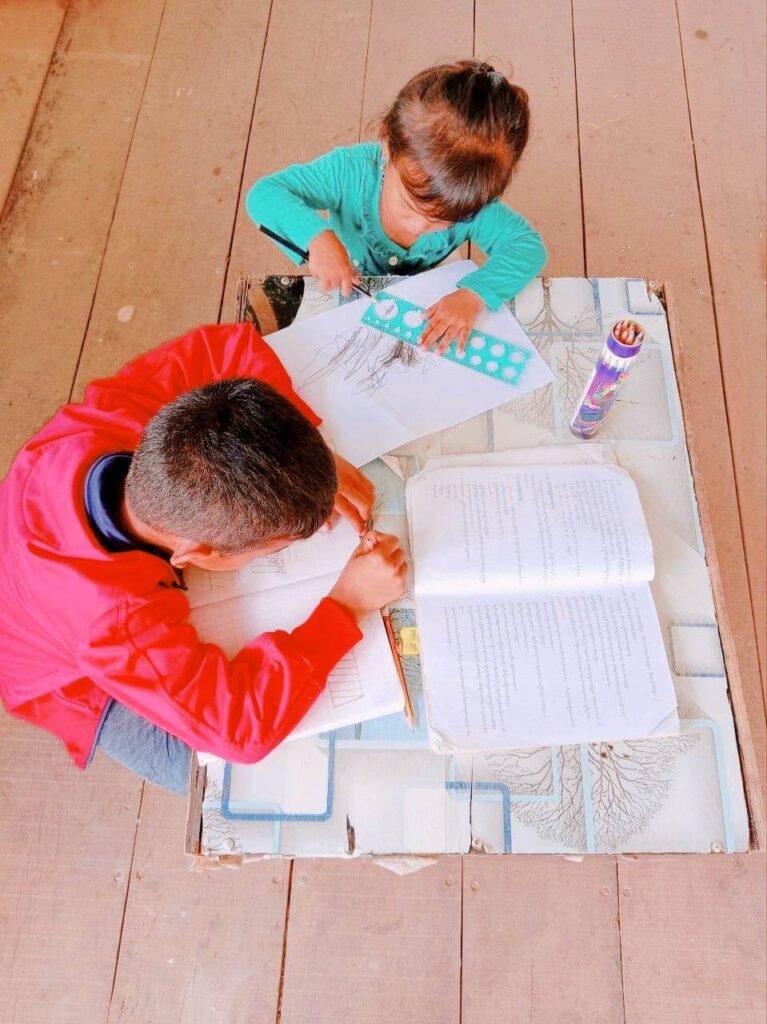
Homework hour used to be an absolute stress fest. I would constantly try to trick her into playing with toys in another room or shoo her away from his study desk. In the end, it just left all three of us—mom and both kids—feeling completely frustrated.
Then it hit me. She wasn’t just acting out for attention. She genuinely wanted to feel included.
The solution turned out to be beautifully simple. Instead of trying to keep them apart, I decided to lean into her desire to be just like her big brother.
I set up a shared learning space right on our wooden floor, handed her some of her own “official” supplies, and let her “work” side by side with him. This single shift completely transformed our chaotic afternoons into a peaceful, orderly routine.
Here is how a few simple, everyday materials can hold your toddler’s attention and give you a little bit of well-deserved quiet time.
Why Your Toddler Wants to Join Homework Time
If your toddler drops whatever she’s doing and rushes over the second her older sibling opens a notebook, you are not imagining it, and you are not doing anything wrong.
Little ones watch their big siblings closely, and to them, homework doesn’t look like a chore. It looks like something important that they want to be part of, too.
Once I stopped treating her interruptions as something to shut down and started treating them as a request to belong, everything got easier.
She didn’t need a different room or a different activity entirely. She needed her own version of the same thing.
A Simple Setup to Keep Your Toddler Busy During Homework Time
You don’t need a picture-perfect playroom or expensive battery-operated toys to hold a toddler’s interest. In fact, the simpler the setup, the more her imagination takes over.
We just use a low wooden table where both kids can kneel or sit comfortably on the floor. While my son lays out his notebooks and school pencils, I give my daughter her own set of “important business” materials.
To recreate this at home, all you need is:
- Blank white paper: One-sided scrap paper works perfectly.
- A simple box of colored pencils.
- A plastic shape stencil ruler: This is your secret weapon.
By giving her a dedicated spot at the same table, she instantly felt that what she was doing mattered just as much as her older brother’s homework.
Why a Stencil Ruler Keeps a Toddler Focused
That little blue plastic stencil ruler has officially become one of the most prized possessions in our house. If you haven’t introduced one to your little one yet, you are missing out.
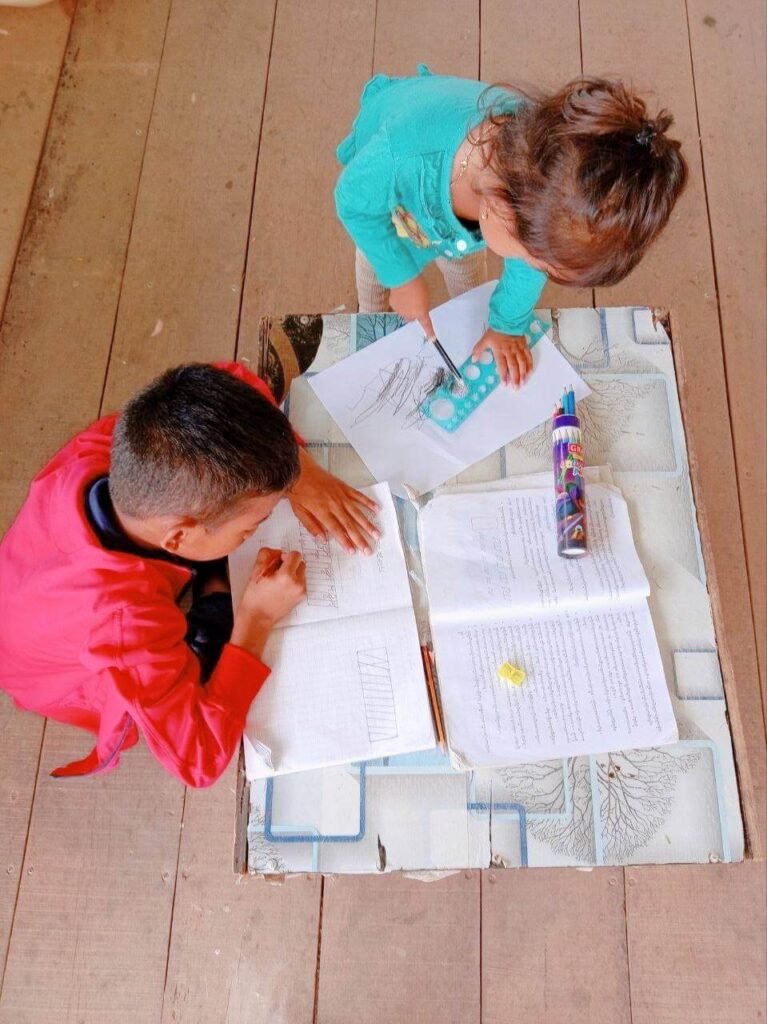
Here is why it works so well for a 3-year-old:
- It feels official: Because it looks exactly like the tools her brother uses for math or drawing, she feels grown-up having her own. Toddlers love to mimic older siblings, and a stencil ruler gives them a safe, hands-on way to do exactly that.
- It keeps little hands busy: Tracing inside those tiny cutouts is serious work for small hands. Pressing down firmly with one hand while guiding a colored pencil with the other helps her hands and eyes work together. It naturally encourages her to slow down and stay with the activity longer than usual.
- It sparks real creativity: Even if the final result looks like a scribbly mess of circles and squares to us, to her it is a masterpiece. The moment she lifts that ruler and sees the shape left behind on the paper, the excitement makes her want to do it again and again.
This is also one of the easiest fine motor activities for a 3-year-old that you can put together with things you likely already have at home.
Sibling Bonding: How Side-by-Side Play Brings Them Closer
The best part of this setup isn’t just the quiet time it buys me. It’s the sweet connection building between siblings. By sitting them at the table together, my daughter feels woven into our daily rhythm.
She watches her brother focus on his writing and naturally mirrors that same calm energy.
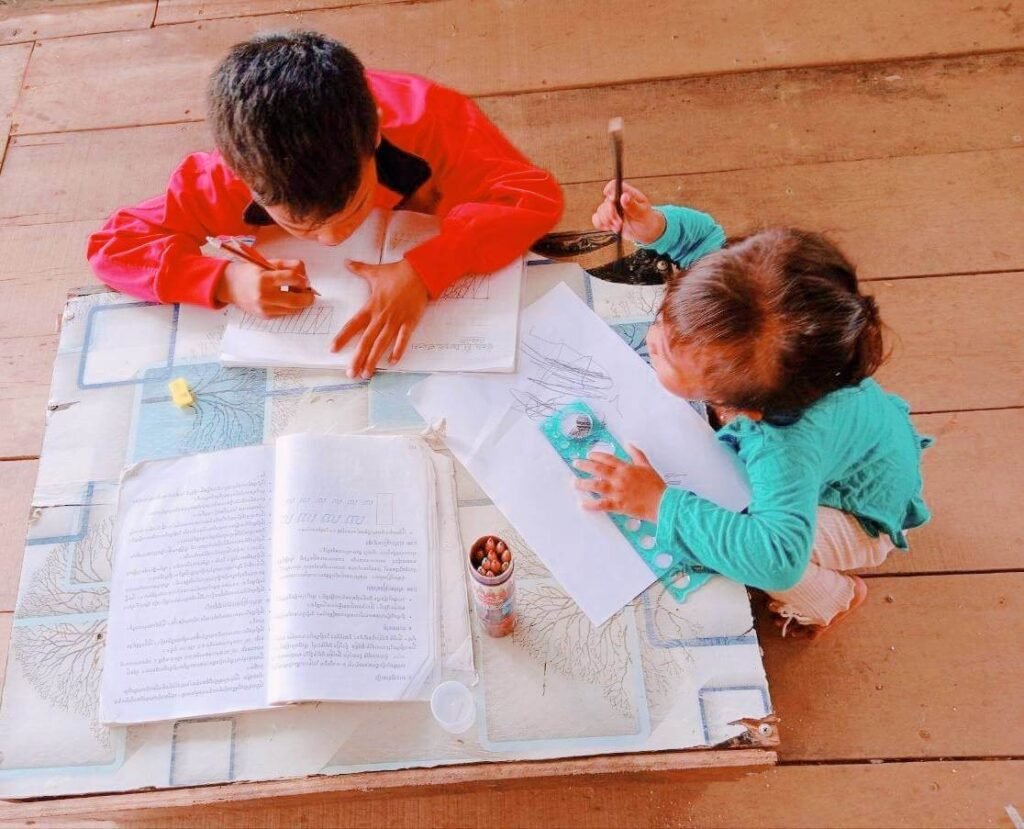
They are working on two completely different tasks, at two completely different ages, yet they are doing it side by side.
It’s a simple way to build independence in both kids while strengthening their bond, and it quietly bridges a five-year age gap without either of them noticing.
Quick Tips for a Peaceful Shared Table
If you want to try this shared table setup with your own kids, a few small habits make a big difference:
- Set clear boundaries: Gently teach your toddler that her paper is her space, but her brother’s schoolbooks are off-limits. It might take a few reminders, but toddlers catch on faster than you’d think.
- Rotate the colors: Toddlers naturally have short attention spans. If she starts getting restless, simply hand her a new colored pencil. Sometimes changing the color is enough to reset her focus.
- Embrace the mess: The goal here is engagement and joy, not a flawless piece of art. If she scribbles outside the lines or holds the stencil upside down, let her be. It’s all part of how she’s learning.
The Bottom Line
Raising a school-aged kid and a busy toddler at the same time is beautifully chaotic, loud, and entirely unpredictable. But if you are trying to establish a calm homework routine, you don’t need a miracle to bring peace to your afternoons.
Sometimes all it takes is a blank piece of paper, a few colors, and one simple plastic stencil.
Disclaimer: The ideas and routines shared on TheParentings reflect my personal experiences as a mother and primary school teacher. This content is for informational purposes only and is not a substitute for professional medical, developmental, or psychological advice. Always consult your pediatrician with specific concerns regarding your child’s health or safety.
