

If you are looking for pretend play ideas for siblings, especially when your kids are years apart in age, this story might be exactly what you need.
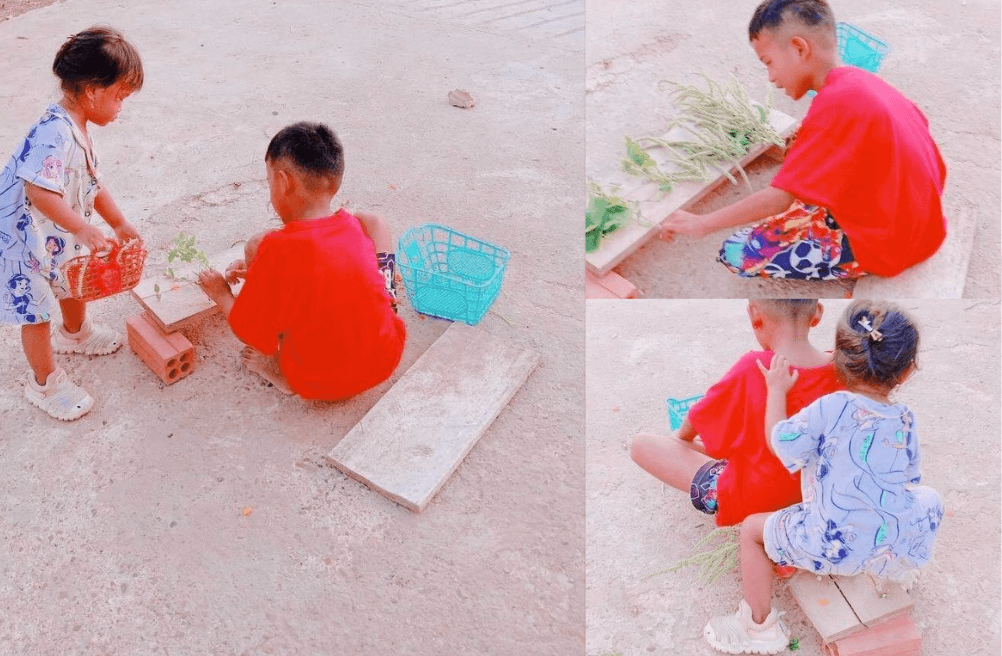
Last Sunday afternoon, my 8-year-old son and my 3-year-old daughter turned our small backyard into a busy little market, and by the end of it, into a bicycle ride home, too.
No toys were involved. Just two bricks, a wooden plank, a basket, and their imagination.
I did not plan any of this. I was inside when I heard them going back and forth outside, my son calling out prices and my daughter babbling in her toddler language.
A few minutes later, I heard him shout something that made me stop and listen: “No, no! No helmet, no bike riding!” That one line told me this was worth writing down.
Our Backyard Market Day: A Sibling Pretend Play Story
That same morning, the four of us had walked to a local market near our house to pick up some fruits and vegetables, the same errand we run most Sundays.
By 4:00 in the afternoon, the weather had cleared up nicely, no sign of rain, so my son and daughter headed to our small backyard garden, which has always been their favorite everyday play spot.
Here is how their afternoon unfolded, piece by piece.
Setting Up the Market Stall
My son walked out to the garden first. He picked a handful of amaranth leaves, a few flowers, and some weeds growing along the edge.
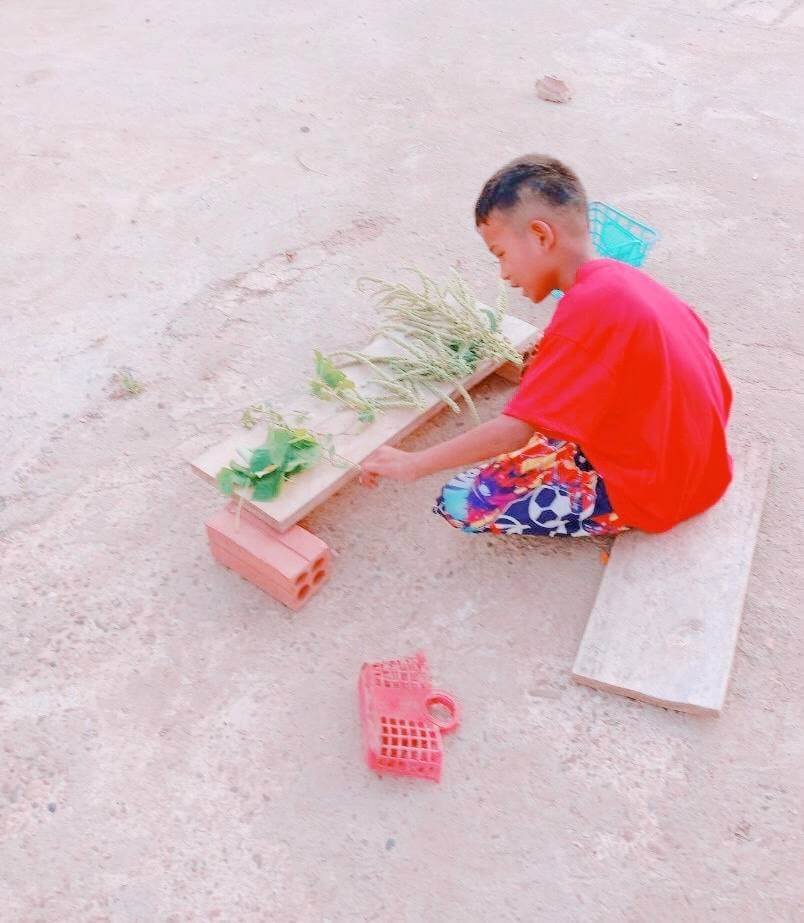
Then he found two bricks lying nearby, placed a wooden plank across them to make a little stall, and grabbed a second plank to sit on.
Once his display of leaves and flowers was arranged, he called out, loud enough for the whole yard to hear, “Does anyone want to buy some fresh vegetables?”
The Little Customer Arrives
My daughter came running the moment she heard him, a little basket already in hand.
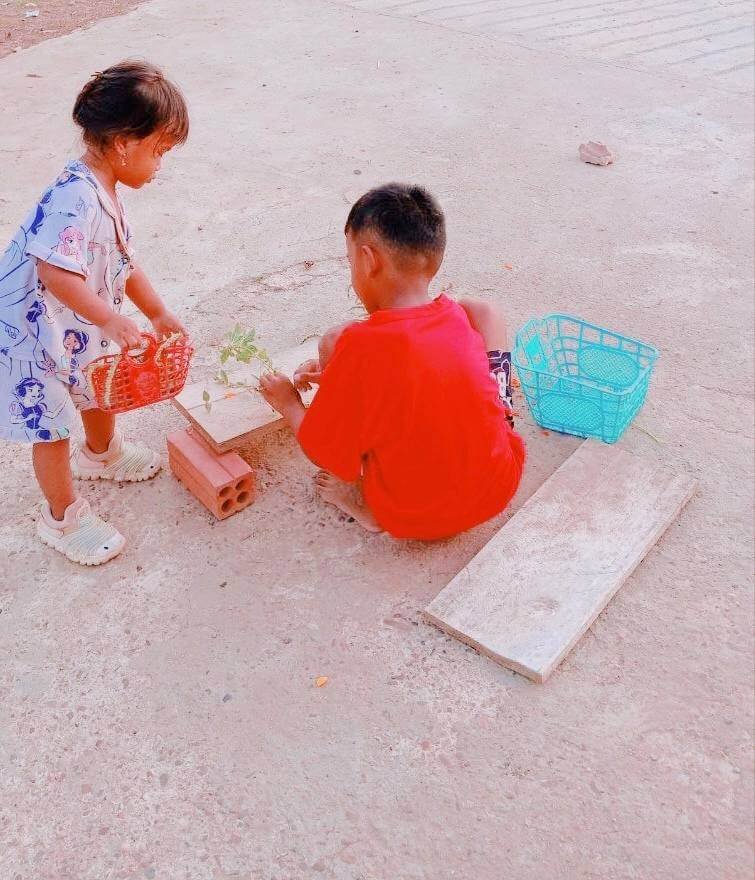
She could not form full sentences yet, so she pointed at the vegetables and babbled away in her own toddler language, but her brother understood perfectly. He picked out the vegetables she was pointing to and placed them into her basket one by one.
Checkout Time: 300 Riels
When it was time to pay, my daughter made a sound that came out something like “Eh-eur,” her version of asking the price.
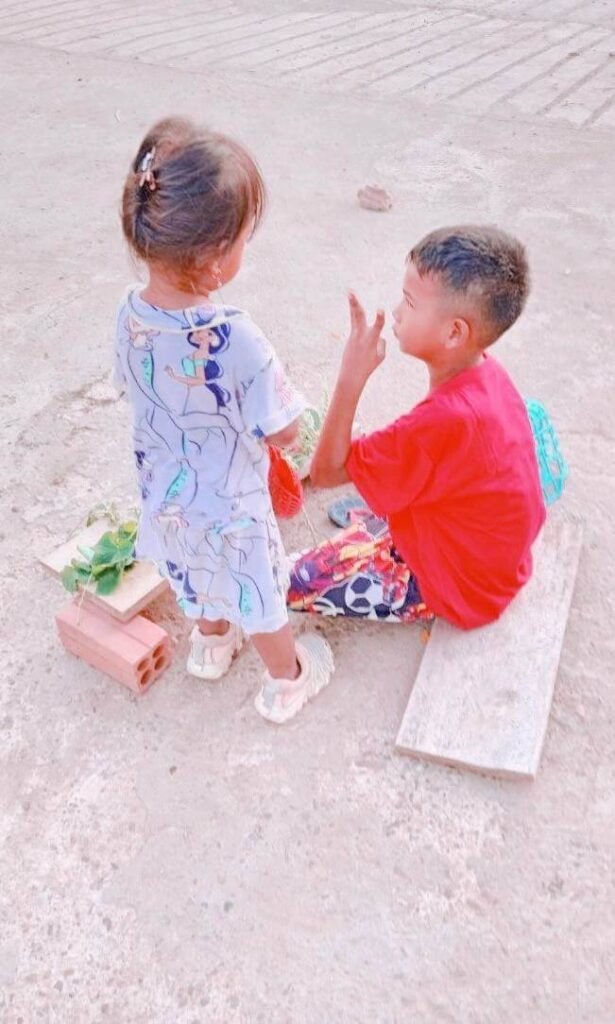
My son held up three fingers without missing a beat. Three fingers meant 300 riels, the total for everything in her basket. No calculator, no cash register, just a quick number pulled straight out of his imagination.
Time to Ride Home
Once the shopping was done, the game shifted instantly.
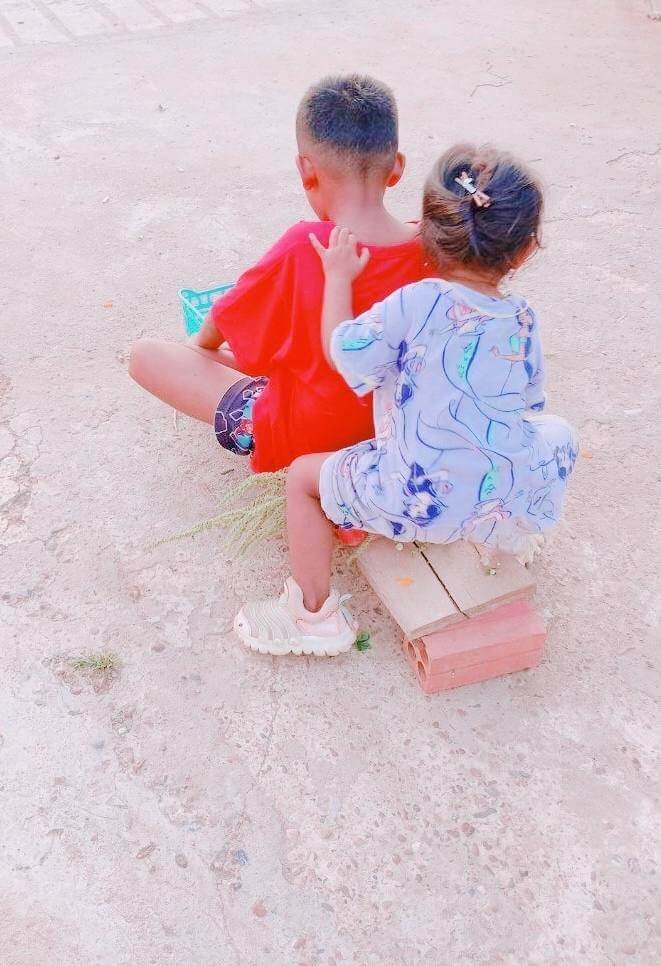
My son sat back down on the wooden plank that had just been his market stall, raised both hands as if gripping bicycle handlebars, and called out, “It’s time to go home! Come on, hop on the back, big brother will give you a ride!”
The Bicycle Ride Home
Just as my daughter climbed on behind him, he suddenly stopped and shouted, “No, no! No helmet, no bike riding!” He reached for the ocean blue basket she had used for her vegetables, flipped it over, and placed it right on his head as a makeshift helmet. Only then did the ride begin.
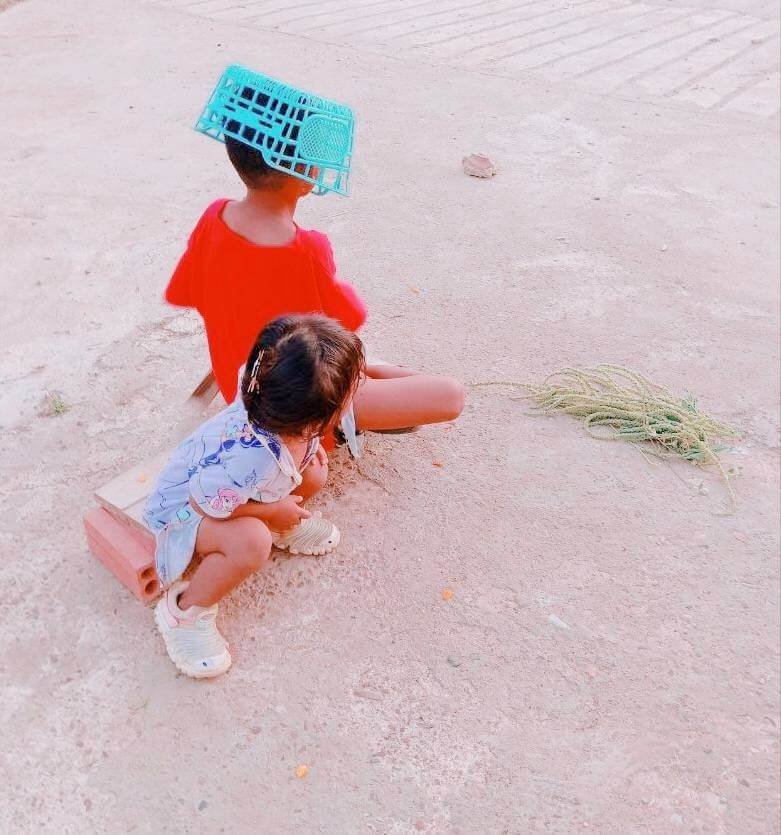
The backyard filled with the sound of his engine noises, “Vroom, vroom, vroom,” and my daughter joined right in, giggling and shouting, “Go, go, go… stop, stop, stop…” until the two of them were laughing too hard to keep driving straight.
Why We Love This Kind of Sibling Play
What struck me most about this whole scene is that I never suggested any of it.
My son built the entire market-and-bike-ride game from things he sees in everyday life: the actual market we visit, the bikes he rides with his helmet on, and his little sister’s habit of babbling before she can fully speak.
This is really what makes sibling role-play activities at home so valuable. An 8-year-old and a 3-year-old do not naturally play the same way. One wants a storyline, the other just wants to be included.
Unstructured play like this gives them a shared script where the older sibling gets to lead and create, and the younger one gets to participate in her own way, even if that just means pointing, babbling, and hopping on for a pretend ride.
It also highlights how closely kids are paying attention. My son did not just copy the market visit; he replayed the pricing, the back-and-forth, even the casual tone adults use with vendors. And that helmet rule was not something I reminded him about that day.
He added it on his own, the same way he had heard it said before every real ride.
Pretend Play Ideas for Siblings You Can Try at Home
If your kids have a similar age gap, or if you are simply out of ideas for backyard activities, here are a few simple ways to encourage open-ended play with no toys required, inspired directly by what worked for us:
- Set up a pretend market or shop: Use anything on hand—leaves, flowers, small stones, or old containers. Let your older child be the seller while the younger one shops with a basket or bag.
- Turn ordinary objects into props: Two bricks and a plank became a stall and a seat in our case. Look around your yard or garage for anything stackable or flat that could double as a counter, table, or bench.
- Let the older sibling set the rules and prices: Kids this age love being in charge of small decisions. Holding up fingers for a price, deciding what is for sale, or announcing when the shop is open all give the older child a sense of ownership over the game.
- Give the younger sibling a simple job: A basket to carry, a bag to fill, or a bell to ring is often enough for a toddler to feel like part of the game, even before they can talk in full sentences.
- Let the story keep moving: Our market day naturally became a bicycle ride home. Do not worry about keeping games within a single theme. Kids will shift scenes the same way they would flip through channels, and that is part of the fun.
These backyard pretend play ideas cost nothing and take no preparation. The best props are usually already sitting in your yard.
How Everyday Routines Show Up in Play
The part of this story I keep coming back to is the helmet. My son was not told to include it. He stopped a fully imaginative bike ride—one with no real bike, no real road, and no real risk—just to grab a basket and wear it as a helmet before letting his sister climb on.
That single moment shows how much repetition matters. He has heard “no helmet, no bike riding” so many times before actual rides that it now shows up automatically, even in a game where nothing was really at stake.
He was not lecturing his sister or explaining rules. He simply would not continue the game without it, the same way he would not skip it before a real ride.
Watching him include this naturally was a great reminder that kids absorb our everyday routines. They replay what they observe, and pretend play is often where you find out exactly what that is.
Our Takeaway
We did not set out to teach a lesson that Sunday afternoon. My son wanted to sell vegetables, my daughter wanted a ride, and somewhere in between, a full story came together on its own, complete with pricing, checkout, and a household rule neither of us had to repeat that day.
If you are searching for pretend play ideas for siblings with a big age gap, what has worked beautifully for us is giving them space, a few open-ended props, and letting them build the story themselves.
You might just end up with your own version of a backyard market day and a bicycle ride home, helmet included.
Disclaimer: The ideas and routines shared on TheParentings reflect my personal experiences as a mother and primary school teacher. This content is for informational purposes only and is not a substitute for professional medical, developmental, or psychological advice. Always consult your pediatrician with specific concerns regarding your child’s health or safety.
